Welcome
TheApple Watch’s Electrocardiogram component has altered how diverse users assess their vascular health. This manual probes into the functionality of the ECG interface on the Device, elucidating how it works and what form of data it can supply. We’ll cover the core principles of heart rhythm readings, feasible limitations, and significant themes to maintain in view before basing the outcomes. Ultimately, this report aims to facilitate you to grasp your pulse’s rhythm with the help of your Wearable
Mastering ECG+ on Your Device
The user’s Electronic accessory delivers an outstanding aspect, the ECG+ app, facilitating you to collect an electrocardiogram accurately from your wrist. This technology isn't a alternative for regular medical evaluations, but it presents valuable insights about your heart beat. The ECG+ app spots atrial fibrillation (AFib), a category of irregular heartbeat, and can spotlight other heart abnormalities. To utilize it, ensure your watch and iPhone are enabled. You’ll must watchOS 7.5 or advanced and iOS 14 or latest on your iPhone. The process necessitates placing your fingers on the Digital Crown and another area below it, allowing the watch end the reading. Results are kept in the Health app and can be distributed with your clinician.
- Check proper watch positioning.
- Respect on-screen instructions.
- Reach out to results with a wellness professional.
Understanding Apple Watch ECG Reader
One Wrist gadget’s ECG capability adopts a distinct approach to measure your vascular electrical waves. It behaves by relying on electrical transmitters located within the control knob and the loop. When you initiate an ECG evaluation, these modules send microscopic electrical flows through your arm, which followingly register the electrical waveforms of your cardiac cycle. These data points are reviewed by cutting-edge formulas within the smartwatch to form an ECG display, which can then be examined within the Health app on your telecommunications device. About accuracy, while the Apple Watch ECG module can deliver valuable information, it is not a surrogate for a formal ECG administered by a medical consultant. Examinations have shown mixed levels of correlation with professional ECGs, highlighting the value for evaluation by a doctor and it is expected to be used as a instrument for monitoring purposes, not for clinical conclusion of atrial conditions.
Deciphering the this device ECG Feature
A certain digital watch’s ECG feature can seem perplexing, but appreciating how it functions is somewhat simple. It’s essential to be aware that this system isn't formulated to stand in for a doctor's evaluation; instead, it furnishes a reading of your vascular electrical function. To summarize, the watch leverages electrodes installed in the crown and display to monitor the heart signals. This ecg app for apple watch operation can show potential disorders like atrial fibrillation, which necessitates intensive medical review.
- It's a foundational device.
- Always engage a healthcare.
- Consider the conditions.
Cardiac Assessment on Apple Watch: Grasping Your Heart Readings
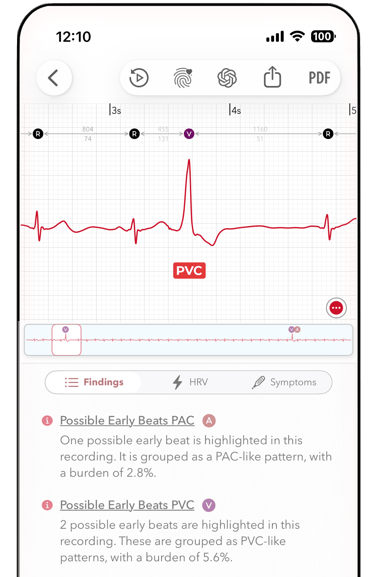
The Apple Watch's ECG component offers a significant glimpse into your cardiovascular tempo. But, it's critical to consider that these readings aren't a alternative for a certified diagnosis. An ECG is capable of detect anomalies like atrial fibrillation (AFib), which is a disorder where your coronary beats non-uniformly. Different findings could include predictable cardiac flow, or aberrant patterns that support additional investigation by a expert clinician. Regularly share your ECG evidence with your physician for reliable assessment and individualized directions.
Could Your Modern Watch ECG Giving Reliable Results?
The widespread Apple Watch ECG feature delivers a tempting glimpse into your coronary health, but a query lingers: may it truly showing accurate outputs? While the Apple Watch ECG is sanctioned by the FDA, it's important to understand it's not a substitute for a professional clinical evaluation. It’s designed to identify potential irregular heart rhythms, which could imply a need for further investigation, but false alerts and false lack of detections are likely. Several variables, including proper application of the watch and wrist contact, are important in get useful results. Think about consulting with your doctor regarding your ECG results and never self-diagnose the Apple Watch's assessment.
- Authenticate proper watch wearing.
- Exchange results with your medical specialists.
- Abstain from self-treating based on ECG information.
Apple Watch ECG & ECG+: Traits and Perks Assessed
The Electronic accessory offers such state-of-the-art ECG and ECG+ option, enabling users to take certain electrocardiogram straight from their forearm. The initial ECG app can reveal signs of cardiovascular disturbances, this potentially concerning heart condition. ECG+ broadens upon this, supplying a expanded 30-second recording window and improved analysis targeted on identifying left-hand side coronary projections, where are considered relevant for particular patients with a precedent of unknown stroke. These potentials signify a remarkable development in portable physiological screening platforms, probably enabling for preliminary support and upgraded person accomplishments.
Addressing Popular Challenges with Your Apple Watch ECG
If the particular Apple Watch ECG software isn't operating as expected, numerous suspected factors may and might be moderately fixed. Before anything else, verify your watch and your iPhone are the latest with the updated software. Then, give a shot at restarting both machines; a brief reboot frequently eliminates light glitches. Additionally, audit the ECG settings in the Health software to guarantee everything necessary parameters exist as configured accurately. Ultimately, if an individual is still having problems, connect to Apple Service for additional support.
Exceeding the Core: Sophisticated Apple Watch ECG Assessment
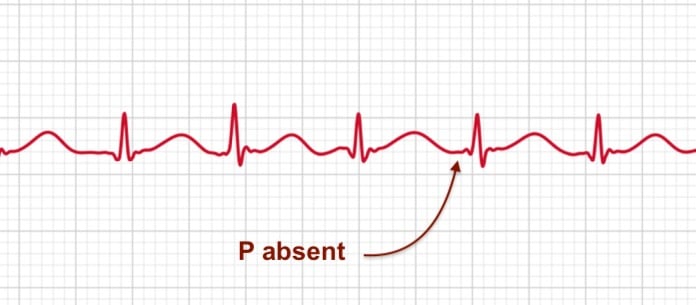
While the Apple Watch’s ECG element offers a outstanding tool for identifying potential atrial fibrillation, understanding exceeding the introductory assessment shows a world of complex alternatives. Painstaking observation of the comprehensive waveform, including properties like P wave morphology, PR duration, and QRS grouping, calls for a extensive awareness of cardiac dynamics. Furthermore, reflecting on trends over time and comparing ECG data with user’s manifestations can yield important insights for extended therapeutic study, albeit it's mandatory to consider that the Apple Watch ECG is is not considered as a stand-in for a accredited cardiac diagnosis.
Best wishes