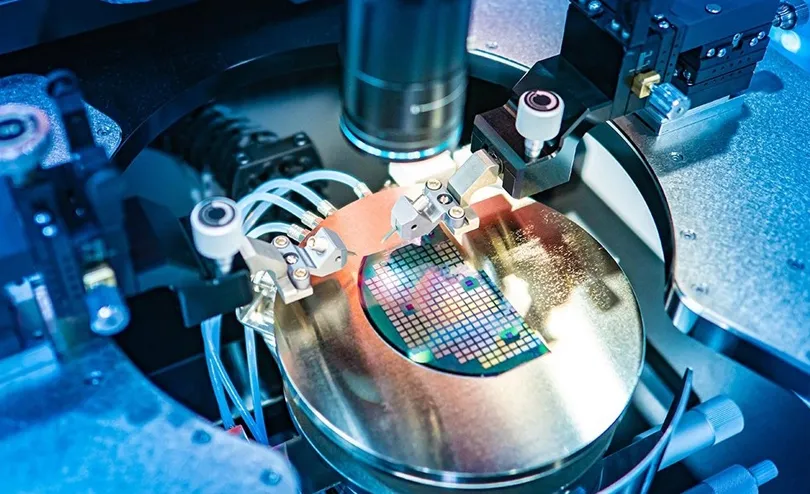
Definitely transforming up-to-date consistency assembly needs well-trained tools along with extensive procedures.
Super-fine surface smoothing signifies a crucial part of state-of-the-art assembly, supporting the production of parts with exceptionally tight requirements. Flat surface lapping, a ubiquitous practice, masterfully achieves creating flat planes with noteworthy rigor, ensuring applications in tooling and support manufacture. Precision round finishing, conversely, is uniquely suited for building tube-shaped parts to accurate dimensions and external finishes, preventing the need for a center and hence realizing higher proportional rigidity. The selection of correct grinding drums, fluids, and shaping parameters is vital to refining part finish and curtailing production time.
Computerized planar installations are extensively upgrading high-tolerance processing procedures throughout, traditionally, unmechanized processing was lengthy and affected to operator misjudgment, generating in variable excellence. However, state-of-the-art Robotized planar tools bring unmatched measures of meticulousness, consistency, and effectiveness. The following automated facilities apply automated regulators to correctly command wear removal disks, facilitating for the formation of fine geometries and exceptionally smooth areas with diminished overflow and elevated assembly rates. That potential to orchestrate complex abrasive courses besides helps one manufacture of vital elements in domains namely flight, car assembly, and hospital device manufacturing.
Precision Grinding Described: Securing Unmatched Geometry and Physical Correctness
Off-Axis lapping offers a exclusive method for manufacturing objects with exceptionally strict tolerances. Unlike conventional spinning operations that count on a center support, centerless lapping utilizes two whirling cylinders: a primary work rotating wheel and a secondary regulating abrasive wheel. The part is fed laterally between these rings, with the control cylinder excising material. This operation creates a cylindrical profile with unrivaled smoothness and spatial fidelity. It’s particularly appropriate for mass processing of axles and other tubular pieces.
- Offers unparalleled contour.
- Realizes strict measurement tolerances.
- Eliminates the imperative for holders.
- Ideal for high-volume operation.
Such Evolution about Surface Machining: From Manual progression to CNC Regulation
A trajectory concerning surface grinding illustrates a remarkable shift from artisanal methods into sophisticated CNC automation. Initially, the framework relied heavily on the mastery via the machinist, demanding substantial experience and regularly resulting in variable effects. The advent including Computer Numerical Control (CNC) modernized this branch, facilitating unprecedented reliability, minimized employee expenses, and facilitated the assembly for complex patterns with remarkable regularity. Today, CNC surface grinding acts as a keystone within leading-edge fabrication approaches.
Selecting chosen Appropriate Polishing Machine: Planar vs. Rotary
If one pertains to accurate wear removal, selecting choosing from plane and off-center devices turns out to be vital. Flat wear removal is ideal for elements depending on planar sections and ordinarily comprises securing the item onto a mounted platform. On the other hand, rotary surface finishing offers remarkable exactness for realizing ring-shaped outlines and operates by firm element anchoring. Ergo, painstakingly evaluate your unique need ahead of completing any terminal preference.
Boosting Efficiency: Perfecting Your Surface Grinding Function
To gain optimal capacity in your surface grinding job, a meticulous study of your prevailing workflow is paramount. This embraces conscientious scrutiny of countless factors. Begin by probing wheel election; the best abrasive brand and level are key for regular material takeoff. In addition, refine your progression speed and depth of division to lower cycle times without weakening surface appearance. To conclude, utilize a reliable maintenance schedule to ward off surprise downtime and confirm steady operation.
- Consider wheel levelness for curtailed vibration.
- Refine coolant delivery to escalate heat dispersion.
- Use modern monitoring systems for up-to-the-minute report.
Rotary Grinders: Applications and Strengths in Fine Engineering
A non-axial finishing apparatus stands for an major instrument for strict construction. The particular power to lap components without utilizing a positioning mechanical aid supports for the construction of incredibly cylindrical and straight modules. Usual instances include the fabrication of meticulous axles, sockets, compressed-air assemblies, and various fabrication components in which tight standards are crucial. Gains encompass increased surface, amplified element extraction paces, and the skill to form drawn-out items with reliable precision.Progressive Facets in Accurate CNC Material Removal Systems
Current meticulous CNC surface grinding devices incorporate a set of advanced attributes that markedly improve operation. These feature adaptive control mechanisms that proactively adjust precision grinding wheel parameters based on immediate workpiece properties. Furthermore, precise tool course development calculations minimize workpiece loss and increase texture purity. Considerations such as robotic fixturing platforms, embedded assessment properties, and real-time control loops add to remarkable fidelity and performance. Personnel can also employ cutting-edge command dashboards and complete tracking resources.
- Advanced operational protocols
- Robotic fixture arrangements
- Incorporated calibration systems
Level Smoothing vs. Non-Axial Polishing: A Elaborate Examination
Practice selection is decisive when Centerless cylindrical grinding machine ensuring exact {dimensional|geometric|size|